
North Carolina Drunk Driving Accident Attorney

Every year, impaired drivers on North Carolina roads shatter lives in an instant. One reckless decision to get behind the wheel after drinking turns an ordinary commute into a catastrophe. If you or a loved one has been injured by a drunk driver, you are facing medical bills, lost income, physical pain, and emotional trauma that no one should have to bear alone. The civil justice system exists to hold drunk drivers accountable and to make injured victims whole again.
At The Law Office of Ryan P. Duffy, PLLC, we represent victims of drunk driving accidents throughout North Carolina and South Carolina. Attorney Ryan P. Duffy is dual-licensed in both states, which gives our firm a distinct advantage for clients in the Charlotte metro area and along the NC/SC border. We handle drunk driving accident cases on a contingency fee basis, which means you pay nothing unless we recover compensation for you.
This guide explains everything you need to know about pursuing a drunk driving accident claim in North Carolina: the laws that apply, the types of damages you can recover, the evidence that strengthens your case, and how our firm approaches these cases from day one.
Hit by a Drunk Driver? Get the Compensation You Deserve.
Drunk Driving Accidents in North Carolina: A Persistent Problem
North Carolina consistently ranks among the states with the highest rates of alcohol-related traffic fatalities. According to the North Carolina Department of Transportation (NCDOT), impaired driving contributes to roughly one-third of all traffic fatalities in the state each year. In the Charlotte metropolitan area alone, Mecklenburg County and surrounding counties like Gaston, Cabarrus, and Union see hundreds of alcohol-related crashes annually.
The numbers are sobering. NCDOT data shows that thousands of crashes each year in North Carolina involve a driver who has consumed alcohol. Many of these crashes result in serious injuries or death. Weekend nights, holidays, and special events correlate with spikes in impaired driving incidents. Despite decades of public awareness campaigns and law enforcement crackdowns, the problem persists.
What makes drunk driving accident cases fundamentally different from other motor vehicle accident claims is the element of conscious choice. A drunk driver made a deliberate decision to consume alcohol and then operate a vehicle. That decision carries legal consequences that go well beyond a typical negligence claim. It can open the door to punitive damages, strengthen your case for full compensation, and may involve additional liable parties like bars or social hosts.
North Carolina DWI Laws and BAC Limits
Understanding North Carolina’s impaired driving laws is essential context for any drunk driving accident claim. The criminal statutes establish the legal standards that courts use to evaluate civil liability.
N.C. Gen. Stat. Section 20-138.1 makes it unlawful for any person to operate a vehicle on a highway, street, or public vehicular area while under the influence of an impairing substance or while having a blood alcohol concentration (BAC) of 0.08 or more. North Carolina recognizes three BAC thresholds:
- 0.08 BAC for standard drivers (the general legal limit)
- 0.04 BAC for commercial vehicle operators
- 0.00 BAC for drivers under the age of 21 (zero tolerance)
North Carolina also has an implied consent law under N.C. Gen. Stat. Section 20-16.2. By driving on North Carolina roads, every motorist implicitly consents to chemical testing (breath, blood, or urine) if a law enforcement officer has reasonable grounds to believe the driver is impaired. Refusing a chemical test results in an automatic license revocation, but refusal does not prevent a DWI prosecution. Officers can obtain a warrant for a blood draw.
Aggravating factors increase the severity of DWI charges and the potential for punitive damages in a civil case. These factors include:
- BAC of 0.15 or higher (grossly aggravating factor)
- Prior DWI convictions within seven years
- Driving while license is revoked for a prior DWI
- A child under 18 in the vehicle
- Causing serious injury to another person
- Speeding to elude arrest
North Carolina’s DWI sentencing structure ranges from Level 5 (least serious, carrying fines of up to $200 and possible jail time of one to 60 days) through Aggravated Level 1 (the most serious, carrying mandatory active jail time of 12 to 36 months with no parole). Each level carries mandatory minimum punishments, and the presence of grossly aggravating, aggravating, or mitigating factors determines the sentencing level.
Under the DWI laws in North Carolina, any person caught driving under the influence of alcohol faces serious criminal penalties. But the civil consequences can be equally significant. When a driver gets behind the wheel while impaired and caused an accident, our lawyer can help the victim build a strong personal injury claim.
Understanding North Carolina’s drunk driving laws is essential when pursuing a claim. Unlike some states, North Carolina follows a contributory negligence standard, which makes legal representation critical for accident victims.
Civil Liability vs. Criminal Prosecution: Why You Need Your Own Attorney
One of the most common misconceptions after a drunk driving accident is that the criminal case will take care of everything. It will not. The criminal case and the civil case are two entirely separate legal proceedings with different purposes, different standards, and different outcomes.
The criminal case is the State of North Carolina versus the drunk driver. The district attorney prosecutes the case. The goal is to punish the drunk driver and protect the public. A conviction requires proof beyond a reasonable doubt, which is the highest standard of proof in our legal system. Importantly, the DA represents the State, not you. The DA’s job is not to get you compensation for your injuries.
The civil case is your personal injury claim against the drunk driver (and potentially other parties). Your attorney represents you. The goal is to recover full and fair compensation for all of your losses. The standard of proof is preponderance of the evidence, which means you must show it is more likely than not that the defendant was negligent and caused your injuries. This is a much lower standard than beyond a reasonable doubt.
The criminal proceedings can affect your civil claim in important ways. A guilty plea or conviction in the criminal case can be used as evidence of negligence in your civil case. Conversely, even if the criminal charges are reduced or dismissed, you can still pursue a civil claim. The two cases operate independently.
While the criminal court can order restitution (payment from the defendant to the victim), restitution is typically limited and often does not come close to covering the full extent of a victim’s losses. Medical bills, lost wages, pain and suffering, and future medical care are all categories of damage that a civil lawsuit can address but that criminal restitution rarely covers adequately.
Hit by a Drunk Driver? Get the Compensation You Deserve.
Negligence Per Se in North Carolina Drunk Driving Cases
Negligence per se is a legal doctrine that gives drunk driving accident victims a significant advantage. Under this doctrine, a violation of a safety statute (like the DWI law) constitutes automatic negligence. You do not have to prove that the drunk driver failed to exercise reasonable care because the law has already defined the standard of care, and the drunk driver violated it.
Here is how it works in practice. In a typical car accident case, you would need to prove four elements: the defendant owed you a duty of care, the defendant breached that duty, the breach caused your injuries, and you suffered actual damages. In a drunk driving case with negligence per se, the first two elements are essentially established by the DWI violation itself. The drunk driver owed a duty not to drive while impaired (as defined by statute), and the drunk driver breached that duty by driving impaired.
Evidence that supports negligence per se includes:
- BAC test results showing a blood alcohol concentration at or above the legal limit
- Police reports documenting the DWI arrest
- Field sobriety test results
- Officer observations of impairment (slurred speech, bloodshot eyes, odor of alcohol)
- A guilty plea or conviction in the criminal DWI case
Because negligence per se streamlines the liability analysis, drunk driving accident cases tend to be stronger than typical car accident cases. The focus shifts from whether the defendant was negligent (which is essentially established) to the extent of damages and potential defenses.
The negligence per se doctrine makes it easier to hold the at-fault driver accountable. When another driver violates DWI laws and causes a car crash, their legal violation is treated as automatic proof of negligence, strengthening your case.
Punitive Damages: Punishing the Drunk Driver
Punitive damages are one of the most powerful tools available to drunk driving accident victims in North Carolina. Unlike compensatory damages (which reimburse you for your losses), punitive damages are designed to punish the defendant for especially egregious conduct and to deter similar behavior in the future.
Under N.C. Gen. Stat. Section 1D-15, a plaintiff may recover punitive damages if the defendant’s conduct was willful or wanton. Willful or wanton conduct is the conscious and intentional disregard of the rights of others, or conduct so reckless that it implies a disregard for the consequences. Driving while intoxicated is a textbook example of willful or wanton conduct, and courts in North Carolina regularly allow punitive damage claims in drunk driving accident cases.
The standard of proof for punitive damages is higher than for compensatory damages. You must prove the defendant’s willful or wanton conduct by clear and convincing evidence, which is an intermediate standard that falls between preponderance of the evidence and beyond a reasonable doubt.
North Carolina caps punitive damages at the greater of three times the compensatory damages or $250,000 (N.C. Gen. Stat. Section 1D-25). For example, if you receive $200,000 in compensatory damages, your punitive damages cap would be $600,000 (three times compensatory). If your compensatory damages are $50,000, the cap would be $250,000 (the statutory minimum floor). There is an exception: if the defendant acted with specific intent to cause harm while under the influence, the cap may not apply.
Punitive damages matter for several reasons. They increase the total value of your claim, they hold the drunk driver financially accountable for their reckless choice, and they send a message that society will not tolerate impaired driving.
The NC Dram Shop Act: Holding Bars and Restaurants Accountable
North Carolina’s Dram Shop Act, codified at N.C. Gen. Stat. Section 18B-121, allows victims of drunk driving accidents to sue a business that sold alcohol to the person who caused the crash. This is significant because it creates an additional source of compensation beyond the drunk driver’s personal assets and insurance.
Under the statute, a business that sells alcohol (a bar, restaurant, nightclub, or package store) can be held liable if it negligently sold alcohol to the drunk driver and that sale proximately caused the plaintiff’s injuries. Specifically, a dram shop claim may be viable when the establishment:
- Sold alcohol to an underage person (under 21), or
- Sold alcohol to a person who was obviously intoxicated at the time of sale
It is important to understand that North Carolina’s dram shop law is more limited than most states. Many states impose strict liability on alcohol vendors, but North Carolina requires proof of negligence. The plaintiff must demonstrate that the establishment knew or should have known that the patron was underage or obviously intoxicated and served them anyway.
The statute of limitations for a dram shop claim is three years from the date of the injury, the same as for other personal injury claims in North Carolina. However, building a strong dram shop claim requires prompt investigation. Critical evidence includes bar receipts, credit card records, surveillance footage, and witness testimony from bartenders, servers, and other patrons. This evidence can disappear quickly, which is why contacting an attorney as soon as possible is essential.
Dram shop claims are valuable because commercial establishments typically carry substantial liability insurance policies, often with limits significantly higher than an individual drunk driver’s auto insurance. This means more potential compensation for the victim.
In accidents involving a drunk driver, the establishment that served the alcohol may have contributed to the accident by continuing to serve a visibly intoxicated patron. These cases require an attorney can help connect the bar’s actions to the injuries sustained.
Social Host Liability in North Carolina
Social host liability addresses situations where a private individual (as opposed to a commercial establishment) provides alcohol to someone who later causes a drunk driving accident. North Carolina’s approach to social host liability is limited but not nonexistent.
North Carolina does not have a general social host liability statute comparable to the Dram Shop Act. However, liability can attach in specific circumstances:
- Providing alcohol to minors. If a social host provides alcohol to a person under 21 who then causes a drunk driving accident, the host may be liable. This is particularly relevant in cases involving house parties attended by underage drinkers.
- Homeowner’s insurance. A social host’s homeowner’s insurance policy may provide coverage for injuries resulting from an intoxicated guest’s actions, depending on the policy terms.
- Employer liability. When an employer hosts a work event where alcohol is served and an employee causes a drunk driving accident after leaving the event, the employer may face liability under respondeat superior or negligent supervision theories.
Social host liability claims are inherently more difficult than dram shop claims, but they remain an important avenue for compensation in certain drunk driving accident cases.
Hit by a Drunk Driver? Get the Compensation You Deserve.
Types of Drunk Driving Accidents
Impaired driving affects every aspect of a person’s ability to operate a vehicle safely. Alcohol slows reaction time, impairs judgment, reduces coordination, and degrades vision. These impairments produce characteristic accident patterns:
Whether the incident is classified as an auto accident, a drunk driving crash, or a multi-vehicle collision, drunk driving accidents can cause devastating injuries. At the accident scene, it is critical to gather evidence and contact law enforcement immediately.
If you were injured in a car accident caused by a drunk driver, you may be entitled to compensation for all expenses related to the accident, including medical bills, lost wages, and pain and suffering.
- Head-on collisions. Drunk drivers are disproportionately involved in wrong-way driving incidents. Alcohol-impaired drivers may enter a highway via an exit ramp, cross the center line, or drive the wrong direction on a divided road. Head-on collisions at highway speeds are among the most devastating and deadly types of crashes.
- Rear-end collisions. Impaired drivers have significantly delayed reaction times. They may fail to notice stopped or slowing traffic until it is too late, causing high-speed rear-end crashes at intersections, highway on-ramps, and construction zones.
- T-bone and intersection crashes. Running red lights and stop signs is a hallmark of impaired driving. Alcohol degrades a driver’s ability to perceive traffic signals and respond appropriately, leading to devastating broadside collisions.
- Pedestrian and cyclist crashes. Impaired drivers have reduced peripheral vision and slower reaction times, making them especially dangerous to pedestrians and cyclists. These vulnerable road users suffer catastrophic injuries when struck by a motor vehicle.
- Hit-and-run crashes. Intoxicated drivers are more likely to flee the scene of an accident, either because they panic or because their impaired judgment prevents them from making rational decisions. Hit-and-run adds criminal charges and can complicate the civil claim if the driver is not immediately identified.
- Multi-vehicle pileups. On highways, a drunk driver’s erratic behavior can trigger chain-reaction collisions involving multiple vehicles, multiplying the number of victims and the complexity of the claims.
Evidence in Drunk Driving Accident Cases
Strong evidence is the foundation of a successful drunk driving accident claim. The good news is that drunk driving cases tend to produce more evidence than typical car accident cases because of the concurrent criminal investigation. Key categories of evidence include:
BAC test results are often the single most important piece of evidence. Blood, breath, or urine tests that show the driver’s BAC was at or above the legal limit provide objective, scientific proof of impairment. Blood tests are generally considered the most accurate.
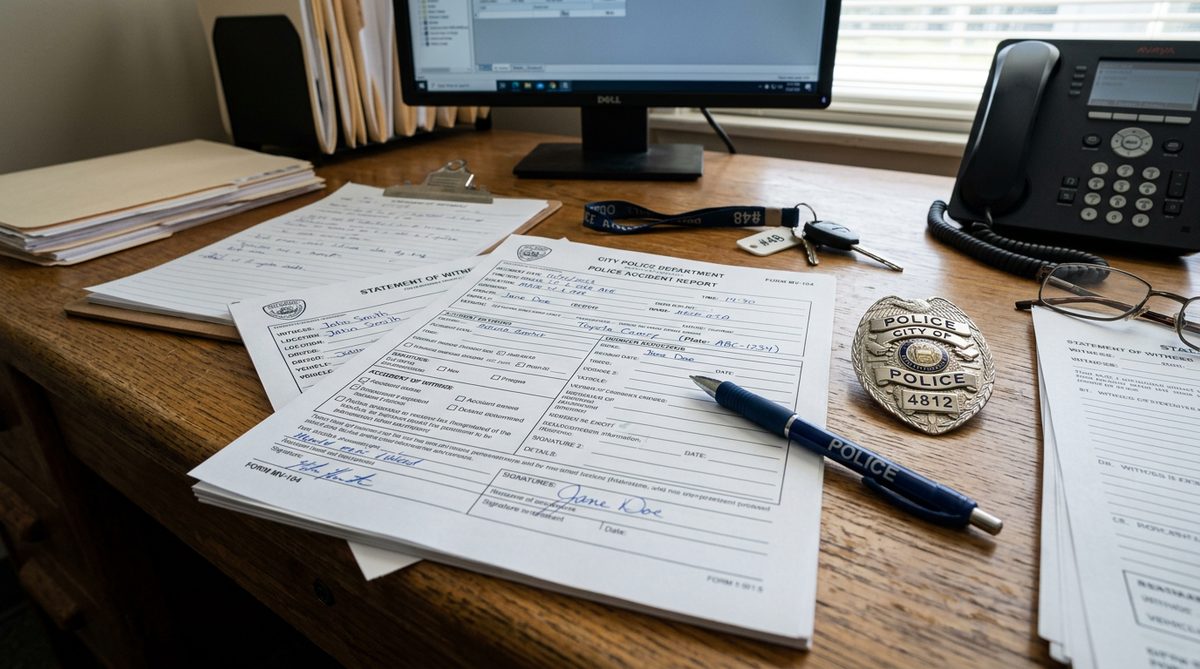
Police reports and arrest records contain the investigating officer’s observations, including the driver’s behavior, appearance, statements, and field sobriety test performance. These reports are created contemporaneously with the event and carry significant weight.
Field sobriety test results document the standardized tests that officers administer at the scene: the Horizontal Gaze Nystagmus (HGN), Walk and Turn, and One-Leg Stand tests. Failed field sobriety tests provide additional evidence of impairment beyond the BAC number.
Dashboard camera and body camera footage from law enforcement provides powerful visual evidence of the drunk driver’s impairment. This footage may capture the driver’s erratic driving, the traffic stop, field sobriety test performance, and post-arrest behavior.
Surveillance video from bars, restaurants, parking lots, and traffic cameras can establish a timeline of the drunk driver’s movements and level of intoxication before the crash. This evidence is particularly important in dram shop claims.
Receipts and credit card records can prove where the drunk driver was drinking, how much they consumed, and over what time period. These records are essential for dram shop claims against bars and restaurants.
Witness testimony from bartenders, fellow patrons, passengers, bystanders, and first responders helps establish a complete picture of the events leading up to and following the accident.
Expert witnesses play an important role in many drunk driving cases. A toxicologist can explain BAC evidence and how alcohol affects driving ability. An accident reconstruction expert can analyze the physical evidence to determine how the crash occurred and the forces involved.
Social media evidence is increasingly relevant. Posts, photos, and check-ins from the night of the crash can establish that the driver was consuming alcohol and may contradict their claims about how much they drank.
Damages Available to Drunk Driving Accident Victims
Victims of drunk driving accidents in North Carolina can pursue a comprehensive range of damages. The goal of compensatory damages is to make you whole again, to put you back in the position you would have been in if the accident had never happened. While no amount of money can truly accomplish that after a serious injury, the law requires the at-fault party to compensate you fully.
Medical expenses include emergency room treatment, hospitalization, surgery, prescription medications, physical therapy, rehabilitation, and all future medical care related to your injuries. Drunk driving accidents frequently cause traumatic brain injuries, spinal cord injuries, and multiple fractures that require extensive ongoing treatment.
Lost wages and loss of earning capacity compensate you for income lost while recovering and for any reduction in your future earning ability. If your injuries prevent you from returning to your previous occupation or from working at all, you are entitled to compensation for that lost income over your remaining work life.
Pain and suffering accounts for the physical pain caused by your injuries. This is a subjective category that considers the severity of your injuries, the duration of your recovery, and the intensity of pain you have endured and will continue to endure.
Emotional distress and psychological trauma are common after drunk driving accidents. Many victims develop post-traumatic stress disorder (PTSD), anxiety, depression, and driving-related phobias. These psychological injuries are real and compensable.
Permanent disability or disfigurement warrants additional compensation. Scarring, loss of limb, loss of vision, paralysis, and other permanent conditions fundamentally alter a victim’s quality of life and future prospects.
Loss of enjoyment of life compensates you for activities and pleasures you can no longer participate in because of your injuries. If you can no longer play with your children, exercise, pursue hobbies, or enjoy everyday activities, you deserve compensation for that loss.
Punitive damages (discussed above) are available in addition to compensatory damages and can significantly increase the total recovery.
Wrongful death damages are available when a drunk driving accident is fatal. We address this category in a separate section below.
Hit by a Drunk Driver? Get the Compensation You Deserve.
Building a case against the drunk driver requires documenting every loss you have suffered. Our goal is to hold the driver responsible for the full extent of the harm they caused, even if the driver may try to shift blame.
North Carolina’s Contributory Negligence Defense
North Carolina is one of only a handful of states that follows the pure contributory negligence rule. Under this rule, if the plaintiff is even one percent at fault for the accident, the plaintiff is barred from recovering any compensation. This is the strictest negligence standard in the country.
In drunk driving cases, the defense may raise contributory negligence in several scenarios:
- Voluntary passenger. If you were a passenger in the drunk driver’s vehicle and you knew (or should have known) the driver was intoxicated before getting in the car, the defense may argue you were contributorily negligent.
- Comparative fault at the scene. The defense may claim you were speeding, ran a traffic signal, or were otherwise negligent in a way that contributed to the crash.
- Failure to wear a seatbelt. While North Carolina’s seatbelt law does limit the admissibility of seatbelt evidence, the defense may still attempt to raise this issue.
However, contributory negligence is harder for defendants to use successfully in drunk driving cases than in typical car accidents. Courts and juries tend to view the drunk driver’s conduct as so egregious that any minor fault on the plaintiff’s part pales in comparison. The last clear chance doctrine may also apply: if the drunk driver had the last clear opportunity to avoid the accident but failed to do so because of impairment, the plaintiff may still recover despite some degree of fault.
The contributory negligence defense is one of the strongest reasons to have an experienced attorney handling your drunk driving accident case. A skilled lawyer knows how to anticipate and counter this defense, preserve favorable evidence, and present your case in a way that minimizes any argument of shared fault.
Wrongful Death from Drunk Driving in North Carolina
When a drunk driving accident results in death, the victim’s family may bring a wrongful death claim under the North Carolina Wrongful Death Act (N.C. Gen. Stat. Section 28A-18-2). The personal representative of the deceased person’s estate files the lawsuit on behalf of the estate and the surviving family members.
Wrongful death damages in North Carolina can include:
- Medical expenses incurred before death
- Funeral and burial expenses
- Lost income and benefits the deceased would have earned
- Loss of companionship, comfort, guidance, and society
- Pain and suffering experienced by the deceased before death
- Punitive damages (if the drunk driver’s conduct was willful or wanton)
Drunk driving wrongful death cases frequently involve punitive damages because the defendant’s decision to drive while impaired is inherently willful or wanton. In fatal DWI cases, the criminal proceedings and the civil wrongful death case proceed simultaneously but independently. A criminal conviction for DWI manslaughter or vehicular homicide supports the civil claim but does not resolve it. The family must still pursue the civil case to recover financial compensation.
When a drunk driver caused an accident that results in death, the driver responsible for the accident can face both criminal prosecution and a civil wrongful death lawsuit. An irresponsible driver who takes a life should be held fully accountable.
Commercial Vehicle DWI Accidents
When the drunk driver was operating a commercial vehicle (a tractor-trailer, delivery truck, or bus), the stakes are higher and additional legal theories apply.
Lower BAC threshold. Commercial drivers are held to a stricter standard. Under both federal law and N.C. Gen. Stat. Section 20-138.2, a commercial driver is impaired at a BAC of just 0.04, half the legal limit for standard drivers. This lower threshold reflects the greater danger posed by large commercial vehicles.
Federal Motor Carrier Safety Regulations (FMCSRs) impose extensive requirements on commercial drivers and their employers, including mandatory drug and alcohol testing, hours-of-service limits, and driver qualification standards. Violations of these federal regulations provide additional evidence of negligence.
Employer liability is a critical component of commercial vehicle DWI claims. The trucking company or commercial carrier may be liable under several theories:
- Respondeat superior: The employer is vicariously liable for the actions of its employee performed within the scope of employment.
- Negligent hiring: The employer failed to conduct adequate background checks and hired a driver with a history of DWI or substance abuse.
- Negligent supervision: The employer failed to monitor the driver’s compliance with drug and alcohol testing requirements.
- Negligent entrustment: The employer entrusted a dangerous instrumentality (the commercial vehicle) to a driver it knew or should have known was unfit.
Commercial vehicle DWI accidents typically involve much larger insurance policies (federal law requires a minimum of $750,000 in liability coverage for most commercial carriers), which means greater potential compensation for victims.
South Carolina Drunk Driving Law: Key Differences
Because Attorney Ryan P. Duffy is licensed in both North Carolina and South Carolina, our firm handles drunk driving accident cases on both sides of the border. There are several important differences between the two states’ laws that can significantly affect the outcome of a case.
Comparative negligence vs. contributory negligence. This is the single biggest difference. South Carolina follows a modified comparative negligence rule with a 50% bar. This means a plaintiff can recover damages even if they were partially at fault, as long as their fault does not exceed 50%. In contrast, North Carolina’s pure contributory negligence rule bars recovery if the plaintiff is even 1% at fault. For cases near the state line, this distinction can be critical.
Dram shop liability. South Carolina’s dram shop liability is broader than North Carolina’s. South Carolina courts have recognized common law dram shop claims that go beyond the statutory framework, giving victims more options for holding alcohol vendors accountable.
Punitive damages. South Carolina’s punitive damages rules differ from North Carolina’s. South Carolina does not apply the same three-times-compensatory cap. Instead, South Carolina courts evaluate punitive damages based on the degree of the defendant’s culpability, which can result in larger punitive awards in egregious cases.
DUI laws and BAC limits. South Carolina uses the term DUI (Driving Under the Influence) rather than DWI, but the BAC limits are the same: 0.08 for standard drivers, 0.04 for commercial drivers, and 0.02 for drivers under 21 (slightly different from NC’s zero tolerance).
Our dual licensing means we can evaluate which state’s laws are more favorable for your particular situation and file your claim accordingly when jurisdiction permits. For accidents that occur in the Charlotte metro area near the state line (Rock Hill, Fort Mill, Tega Cay), this flexibility is a real advantage.
Hit by a Drunk Driver? Get the Compensation You Deserve.
Insurance Claims After a Drunk Driving Accident
The insurance claims process in a drunk driving accident case involves several layers of coverage that you need to understand.
The drunk driver’s auto insurance is the primary source of compensation. You file a third-party liability claim against the drunk driver’s insurer. However, North Carolina’s minimum auto insurance requirements are only $30,000 per person and $60,000 per accident for bodily injury liability. These minimums are woefully inadequate for the catastrophic injuries that drunk driving accidents frequently cause. A single surgery can exceed $30,000, leaving victims with massive uncompensated losses if the drunk driver carries only minimum coverage.
Uninsured/Underinsured Motorist (UM/UIM) coverage is critical when the drunk driver has no insurance or insufficient insurance. North Carolina law requires insurance companies to offer UM/UIM coverage, and most policies include it unless you specifically rejected it in writing. UM/UIM coverage allows you to file a claim under your own policy for the difference between the drunk driver’s coverage and your losses.
Dram shop and employer liability insurance provides additional pools of coverage. If a bar, restaurant, or employer is liable, their commercial general liability or liquor liability insurance policies typically carry much higher limits than an individual’s auto policy.
Bad faith insurance practices occur when an insurance company unreasonably denies, delays, or undervalues your claim. Insurance companies are for-profit businesses, and their interests are not aligned with yours. Having an experienced attorney ensures that the insurance company takes your claim seriously and does not engage in bad faith tactics.
Your civil insurance claim proceeds independently from the criminal case. Even if the driver receives a lenient sentence, the outcome of the criminal case does not limit your right to pursue compensation in a civil lawsuit.
Our Approach to Drunk Driving Accident Cases
At The Law Office of Ryan P. Duffy, PLLC, we understand that a drunk driving accident is not just a legal matter. It is a life-altering event. Our approach is thorough, aggressive, and client-focused.
Free case evaluation. Every case begins with a free, no-obligation consultation. We listen to your story, review the available evidence, and give you an honest assessment of your legal options.
Contingency fee representation. We handle drunk driving accident cases on a contingency fee basis. You pay no attorney fees unless we recover compensation for you. This means our interests are fully aligned with yours.
Immediate investigation and evidence preservation. Time-sensitive evidence in drunk driving cases can disappear quickly. Surveillance footage is overwritten, witnesses’ memories fade, and bar receipts are discarded. We move fast to preserve critical evidence, send spoliation letters to relevant parties, obtain police reports and arrest records, and secure BAC test results and dashcam footage.
Coordination with law enforcement. We work with law enforcement agencies to obtain the evidence generated during the criminal investigation. While we cannot control the criminal case, we can leverage the evidence it produces to strengthen the civil claim.
Holding all responsible parties accountable. We investigate not just the drunk driver but every party who may bear responsibility: the bar that overserved, the employer who failed to supervise, the social host who provided alcohol to a minor. Multiple liable parties means multiple insurance policies and a greater likelihood of full compensation.
If a drunk driver has injured you or a member of your family, do not wait to seek legal help. Evidence disappears, witnesses forget, and the statute of limitations is running. Contact The Law Office of Ryan P. Duffy today for a free consultation.
Hit by a Drunk Driver? Get the Compensation You Deserve.
Our law firm has extensive experience handling drunk driving accident cases throughout North Carolina. Our experienced drunk driving accident lawyer team understands how drunk driving cases often involve complex insurance and liability questions. A driving accident lawyer can help you navigate every step of the legal process.
If you were injured in a drunk driving accident, schedule a free consultation with our firm. We handle every accident caused by impaired drivers with the goal of securing full and fair compensation for our clients.
Frequently Asked Questions About Drunk Driving Accident Claims in North Carolina
Can I sue a drunk driver who hit me?
Yes. You have the right to file a civil personal injury lawsuit against a drunk driver who caused your injuries. The civil case is completely separate from any criminal DWI charges the driver faces. Even if the criminal case results in a plea deal, dismissal, or acquittal, you can still pursue a civil claim for compensation. The civil standard of proof (preponderance of the evidence) is lower than the criminal standard (beyond a reasonable doubt).
What is the difference between a criminal DWI case and a civil lawsuit?
The criminal case is prosecuted by the State of North Carolina to punish the drunk driver. The district attorney handles it, and you are a witness, not a party. The civil lawsuit is your personal injury claim to recover financial compensation for your injuries, medical bills, lost wages, pain and suffering, and other damages. You need your own attorney for the civil case because the DA does not represent your financial interests.
Can I sue the bar that served the drunk driver?
Under North Carolina’s Dram Shop Act (N.C. Gen. Stat. Section 18B-121), you may be able to sue a bar, restaurant, or other alcohol vendor that negligently sold alcohol to the driver. You must show the establishment sold alcohol to someone who was underage or obviously intoxicated at the time of sale. Dram shop claims are valuable because commercial establishments carry larger insurance policies than individual drivers.
What are punitive damages in a drunk driving case?
Punitive damages are additional compensation awarded to punish the drunk driver for especially reckless conduct and to deter similar behavior. Under N.C. Gen. Stat. Section 1D-15, drunk driving often qualifies as willful or wanton conduct. Punitive damages in North Carolina are capped at three times the compensatory damages or $250,000, whichever is greater. They are awarded in addition to your compensatory damages (medical bills, lost wages, pain and suffering).
How long do I have to file a drunk driving accident claim in North Carolina?
The statute of limitations for personal injury claims in North Carolina is three years from the date of the accident (N.C. Gen. Stat. Section 1-52). For wrongful death claims, the statute runs two years from the date of death. However, waiting to file is risky because evidence deteriorates over time. Surveillance footage is overwritten, witnesses move away, and records are destroyed. Contact an attorney as soon as possible.
What if the drunk driver has no insurance?
If the drunk driver is uninsured, you may still have options. Your own Uninsured Motorist (UM) coverage can provide compensation. North Carolina law requires insurers to offer UM coverage. Additionally, if a dram shop claim is viable, the establishment’s commercial insurance provides a separate source of recovery. An attorney can identify all available coverage to maximize your compensation.
Can I recover compensation if I was a passenger in the drunk driver’s car?
Yes, but there is a potential complication. If you knew the driver was intoxicated before getting in the vehicle, the defense may argue contributory negligence. However, courts evaluate the totality of the circumstances, including how obvious the driver’s intoxication was and whether you had reasonable alternatives. Many passenger claims are successful, particularly when the driver’s intoxication was not apparent before departure.
What evidence is needed to prove the other driver was drunk?
The strongest evidence includes BAC test results, police reports, field sobriety test results, and officer observations of impairment. Additional evidence includes dashboard and body camera footage, surveillance video from bars, receipts showing alcohol purchases, witness testimony, and toxicology expert analysis. A criminal DWI conviction or guilty plea is also powerful evidence in the civil case.
How much is my drunk driving accident case worth?
Every case is different, and the value depends on the severity of your injuries, the extent of your medical treatment, your lost income, the impact on your quality of life, and the availability of punitive damages. Drunk driving cases tend to have higher values than typical car accident cases because of the punitive damages component and the strength of the negligence per se argument. We provide a free case evaluation to discuss the potential value of your specific case.
What if the drunk driver pleads guilty to criminal charges?
A guilty plea in the criminal case is strong evidence in your civil case, but it does not automatically resolve the civil claim. You still need to file a civil lawsuit (or negotiate a settlement) to recover compensation. The guilty plea establishes that the driver was impaired, which supports negligence per se, but you still need to prove the extent of your damages.
Can I recover damages if the drunk driver dies in the crash?
Yes. If the drunk driver dies in the accident, you can file a claim against the driver’s estate. The estate’s auto insurance policy provides coverage for the deceased driver’s liability. Additionally, if a dram shop claim or other third-party liability exists, those claims are unaffected by the driver’s death.
What is negligence per se?
Negligence per se is a legal doctrine that establishes automatic negligence when a person violates a safety statute. In drunk driving cases, the violation of North Carolina’s DWI law (N.C. Gen. Stat. Section 20-138.1) constitutes negligence per se. This means you do not have to prove the driver was careless because the law defines driving while impaired as inherently negligent. This doctrine significantly strengthens drunk driving accident claims compared to typical motor vehicle accident cases.
The information on this page is for general informational purposes only and does not constitute legal advice. No attorney-client relationship is formed by your use of this website or by contacting the Law Office of Ryan P. Duffy. Every case is unique, and past results do not guarantee future outcomes. If you need legal advice, please contact our office to schedule a consultation.
Explore Our Other Practice Areas
The Law Office of Ryan P. Duffy represents injured victims across North Carolina and South Carolina in a wide range of personal injury and wrongful death cases. Beyond drunk driving accidents, we can help with:
- Construction Accident Attorney
- Nursing Home Abuse Attorney
- Wrongful Death Attorney
- Pedestrian Accident Attorney
- Rear-End Accident Attorney
- Dog Bite Injury Attorney
Every case starts with a free consultation. Call (704) 741-9399 or contact us online to discuss your situation.