Mooresville Construction Accident Lawyer

Mooresville earned the nickname “Race City USA” for the concentration of NASCAR team shops and motorsport engineering facilities that line the streets off NC Highway 150 and Cayuga Drive. But this Iredell County town of 50,000 is defined by more than racing. Lake Norman — the largest man-made body of water in North Carolina — shapes the western edge of the community and drives a waterfront construction industry that builds docks, marinas, retaining walls, and lakefront homes. The combination of highly specialized motorsport construction and demanding waterfront building creates a hazard profile unlike any other city in the Charlotte metro.
If you were injured on a construction site in Mooresville or along the Lake Norman shoreline, workers’ compensation covers your immediate medical expenses and a portion of your lost wages. But it stops there. A third-party claim against the party whose negligence caused your injury — whether it is a general contractor, an equipment manufacturer, a marine subcontractor, or a property owner — can recover full damages including pain and suffering, complete lost income, and compensation for permanent impairment that workers’ comp does not touch.
Motorsport Facility Construction: Precision Environments, Serious Hazards
Building a NASCAR team shop or a motorsport engineering facility is not like building an office building. These structures house wind tunnels, dynamometer rooms, seven-post shaker rigs, and precision machine shops that require cleanroom-level environmental controls. The construction involves pouring isolated foundation pads that prevent vibration transfer, installing electrical systems capable of handling industrial power loads, building HVAC systems that maintain temperature and humidity within narrow tolerances, and fitting out interior spaces with epoxy-coated floors and walls that meet cleanroom contamination standards.
The hazards are concentrated in the mechanical and electrical trades. High-voltage electrical installations carry the risk of arc flash — an explosive release of energy that can cause severe burns, hearing loss, and blast injuries. Arc flash incidents in industrial construction are among the most devastating injuries a worker can suffer, with burn temperatures exceeding 35,000 degrees Fahrenheit at the arc point. When an electrical contractor fails to de-energize circuits before work begins, fails to test for residual energy, or fails to provide arc-rated personal protective equipment, that contractor is liable for the resulting injuries.
Confined space work is common in motorsport facility construction. Ductwork installation, underground utility vault work, and tank installation all require workers to enter spaces where atmospheric hazards — oxygen depletion, toxic gas accumulation, or explosive vapor concentrations — can be fatal. OSHA’s confined space standard requires permits, atmospheric monitoring, attendants stationed outside the space, and rescue equipment immediately available. When a contractor skips any of these steps and a worker is overcome by hazardous atmosphere, that violation is powerful evidence in a third-party claim.
Waterfront and Dock Construction Hazards on Lake Norman
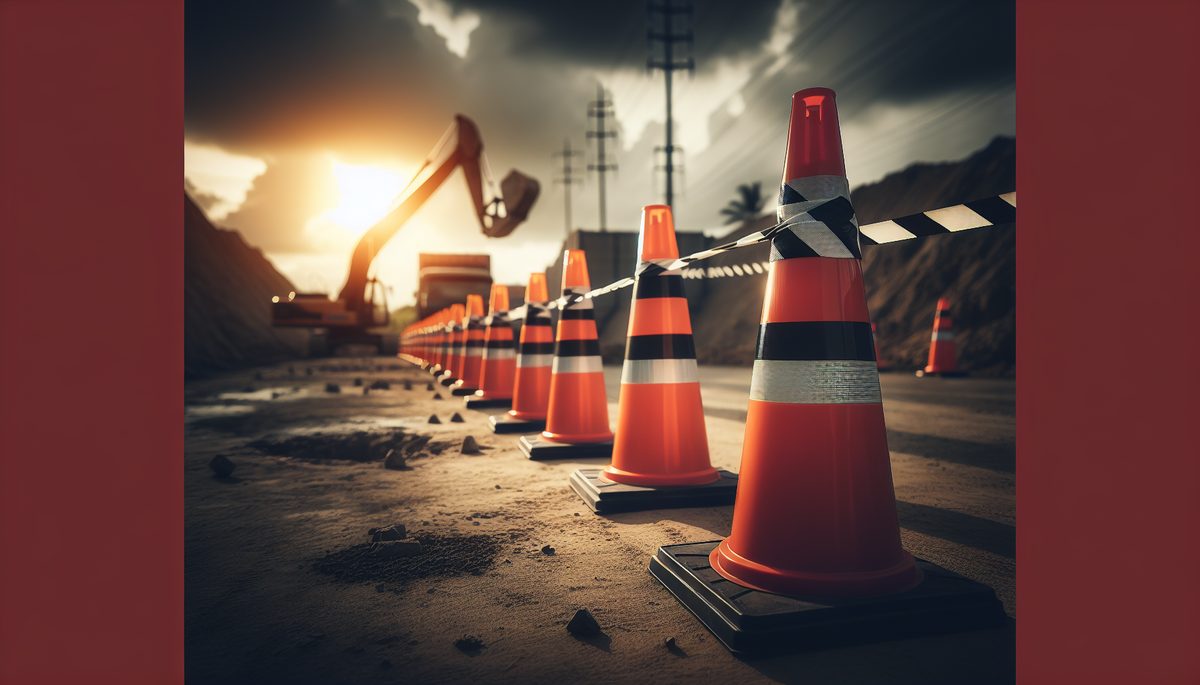
Lake Norman’s 520 miles of shoreline support a continuous pipeline of waterfront construction — private docks, seawalls, retaining walls, boathouses, and lakefront home foundations. This work takes place at the interface of land and water, creating a combination of traditional construction hazards and drowning risks that inland projects do not have. Workers operating on barges, standing on partially completed docks, or driving piles from floating platforms are one misstep or equipment failure away from entering water that may be 30 feet deep with limited visibility.
Marine construction on Lake Norman also involves driving heavy equipment — excavators, pile drivers, cranes — on barges and floating work platforms that shift with wave action and wind. Equipment stability calculations that work perfectly on solid ground fail on a barge that is rocking. Crane lifts that would be routine on land become dangerous when the crane’s base is moving. Workers on adjacent platforms or on the shoreline can be struck by loads that swing unpredictably when the barge shifts during a lift.
The liability analysis for Lake Norman waterfront construction injuries often involves the property owner who hired the marine contractor, the general contractor who subcontracted the waterfront work, the marine subcontractor whose crew performed the work, and the manufacturer of any equipment that failed. If the property owner selected an unqualified marine contractor to save money, or if the GC failed to verify that the marine sub carried proper insurance and certifications, those parties may share liability with the sub whose crew caused the accident.
Mooresville Construction and the Contributory Negligence Defense
North Carolina’s contributory negligence rule poses a specific threat in specialty construction cases. Defense attorneys in motorsport facility injury cases argue that the worker should have recognized the electrical hazard, should have tested for voltage before beginning work, or should have demanded arc flash PPE before entering the panel room. In waterfront construction cases, the defense argues the worker should have worn a personal flotation device, should have recognized the barge was listing, or should have refused to work in rough water conditions.
The answer to these arguments is evidence showing that the employer or the third party controlled the safety conditions and made the decisions that put the worker in danger. If the GC directed the electrician to work on energized circuits to avoid a shutdown delay, the GC’s instruction — not the worker’s compliance — is the proximate cause. If the marine contractor did not provide PFDs or prohibited workers from wearing them because they slowed productivity, that is the contractor’s choice, not the worker’s negligence. Building this evidence requires early investigation and aggressive preservation demands. The filing deadline for a third-party claim in North Carolina is 3 years. Workers’ comp claims have a 2-year deadline.

After a Construction Injury in Mooresville
Get to Lake Norman Regional Medical Center on Fairview Road or call 911. For waterfront injuries involving a worker in the water, call 911 immediately and do not attempt a water rescue unless you are trained and equipped to do so. Report the injury to your employer in writing. Photograph the scene from every angle — on waterfront sites, photograph the barge, the dock, the equipment positions, and the water conditions. Get witness names and phone numbers. If you were working around electricity, note whether the circuits were de-energized and whether lockout/tagout procedures were in place. Decline to give recorded statements to insurance adjusters until you have legal representation.
How Ryan Duffy Helps Mooresville Construction Workers
Ryan evaluates construction accident cases throughout Mooresville and the Lake Norman area at no cost. His experience defending insurance companies before switching to represent injured workers gives him direct insight into how adjusters and defense counsel approach specialty construction claims — and where their strategies are vulnerable. When a third-party claim is viable, Ryan connects you with a litigation firm experienced in construction accident cases involving the specific hazards of your injury. There is no fee for this referral. Ryan remains accessible throughout the process to ensure you receive aggressive, informed representation.
Frequently Asked Questions
Can my employer fire me for reporting a safety violation?
No. Federal law — specifically Section 11(c) of the Occupational Safety and Health Act — prohibits employers from retaliating against workers who report safety violations, file OSHA complaints, or refuse to work in conditions that pose an imminent danger of death or serious injury. If you were fired, demoted, transferred, or had your hours cut in retaliation for reporting a safety concern, you can file a whistleblower complaint with OSHA within 30 days. You may also have a separate wrongful termination claim under North Carolina law. Retaliation does not affect your right to pursue a third-party injury claim.
I got heat stroke working on a lakeside construction site. Is that a valid injury claim?
Absolutely. Heat illness — including heat stroke, heat exhaustion, and exertional rhabdomyolysis — is a recognized occupational hazard on construction sites, and it is more acute on lakeside projects where reflective water surface temperatures amplify heat exposure. Workers’ comp covers heat-related injuries that occur during the course of employment. A third-party claim may exist if the general contractor failed to provide shade, water, rest breaks, or a heat illness prevention program as required by OSHA’s general duty clause. If the GC pushed the schedule and refused to implement heat mitigation despite elevated temperatures, that is evidence of negligence.
Does a specialty contractor need different insurance than a regular GC?
Specialty contractors — marine construction firms, cleanroom builders, motorsport facility contractors — typically carry specialized insurance policies that reflect the unique hazards of their work. A marine contractor working on Lake Norman should carry maritime liability coverage in addition to standard commercial general liability and workers’ comp. If a specialty contractor is underinsured or lacks coverage for the specific type of work being performed, injured workers may need to pursue claims against other parties with adequate coverage, such as the property owner or the general contractor who hired the underinsured specialty sub.
Need Legal Help? Free Case Evaluation
The Law Office of Ryan P. Duffy evaluates construction accident cases and connects you with the right specialist at no additional cost.
Call us at 704-741-9399 or contact us online to get started.
The information on this page is for general educational purposes and does not constitute legal advice. Every case is different. Past results do not guarantee future outcomes. Contact our office for a free consultation to discuss the specifics of your situation.
Related Pages
Explore nearby pages for this city and practice area.