

Monroe Construction Accident Lawyer

Monroe sits at the center of Union County, a region in rapid transition from agricultural farmland to suburban development. The fields and forests that lined Highway 74 and the rural roads south of Charlotte are giving way to subdivisions, shopping centers, schools, and the infrastructure that supports them. But Union County’s rural roots still shape its construction industry. Agricultural building projects, small-crew residential construction, and utility installation in areas where the infrastructure has not caught up with the population growth create hazards that look nothing like what you find on a Charlotte high-rise.
Construction workers injured in Monroe and Union County deserve to know that workers’ compensation is not their only option. When a third party — a general contractor, a utility company, an equipment supplier, or a property owner — caused or contributed to the accident, a separate civil claim can recover compensation that goes far beyond what workers’ comp provides. Pain and suffering, full wage replacement, and long-term disability damages are all available through third-party claims but completely excluded from workers’ comp.
Injured? Get a Free Case Evaluation Today.
Agricultural Building Construction and Farm Structure Hazards
Union County still has a significant agricultural sector, and the construction of barns, equipment sheds, grain storage facilities, and livestock buildings is an active industry here. These projects operate with less safety oversight than commercial construction. There is no full-time safety director. Toolbox talks do not happen. OSHA inspections are rare on a job site with four or five workers building a pole barn on a farm off Rocky River Road. The informal culture of agricultural construction creates real danger for the workers doing the building.
Silo construction and grain bin erection present some of the most lethal hazards in any construction category. Workers assembling grain bin walls at height, welding silo components, or working inside partially completed storage structures face fall risks, confined space hazards, and the risk of structural collapse if temporary bracing fails during assembly. The manufacturers of pre-engineered grain storage systems provide installation manuals with safety requirements, but small crews often deviate from those instructions to save time. When a manufacturer’s safety requirements are ignored and a worker is injured, the question of who bears liability — the installer, the farmer who hired them, or the manufacturer whose product required specialized installation — becomes the central issue in a third-party claim.
Heavy timber and metal building construction for agricultural structures also involves equipment hazards that are amplified by the rural setting. Telehandlers, skid steers, and cranes operate on uneven ground, sometimes on slopes that were never graded for construction access. Equipment rollovers and tip-overs on sloped agricultural land are a recognized cause of fatal construction injuries in rural counties like Union.
Utility Infrastructure Construction in Rapidly Developing Rural Areas
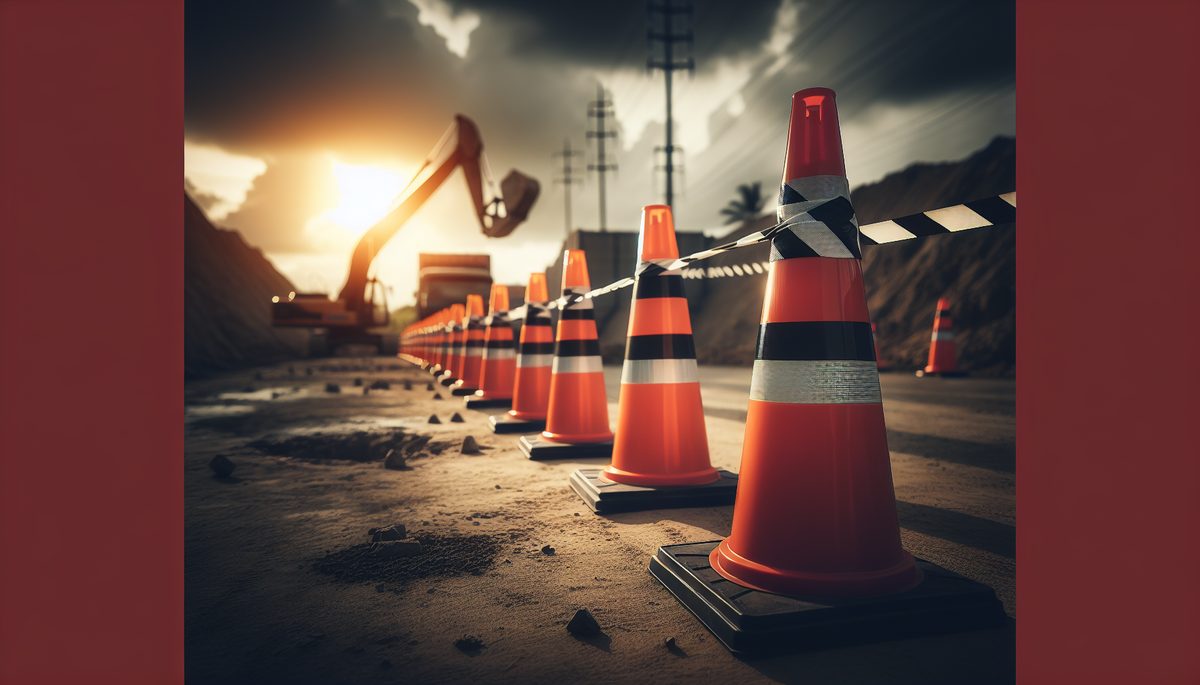
The population boom in Union County has outpaced the infrastructure. New subdivisions along Wesley Chapel Road, Weddington Road, and Indian Trail-Fairview Road require water lines, sewer mains, gas service, electrical conduits, and fiber optic cable — all of which must be trenched into the ground before the first house goes up. This utility construction is dangerous work performed by crews who are often under extreme pressure from developers waiting for utility connections so they can start selling lots.
Trenching is the single deadliest activity in utility construction. A trench collapse can bury a worker in tons of soil in seconds, and the survival rate for fully buried workers is grim. OSHA requires protective systems — sloping, shoring, or trench boxes — for any excavation deeper than five feet. In Union County’s clay soils, which can hold a vertical wall for hours before suddenly collapsing, contractors sometimes skip protection because the trench looks stable. That false sense of security kills workers every year across North Carolina.
Gas line and electrical conduit installation adds the risk of striking existing buried utilities. Rural areas often have utility maps that are outdated or incomplete. A backhoe bucket hitting a gas main can cause an explosion. Cutting into a live electrical conduit can electrocute the operator or anyone standing in contact with the machine. The utility company that failed to accurately locate its lines, the contractor who failed to call 811 before digging, and the developer who provided inaccurate as-built drawings can all bear third-party liability when a utility strike injures a worker.
Union County’s Rural Context and North Carolina’s Fault Rule
North Carolina’s contributory negligence doctrine creates particular challenges in rural construction injury cases. The defense argument is predictable: the worker was experienced, the hazard was visible, and a reasonable person would have refused to enter the trench or climb the structure without protection. This argument ignores economic reality. A construction worker in Union County who refuses to enter an unshored trench often gets fired on the spot and replaced the same afternoon. The power imbalance between a small contractor and a laborer who needs to feed a family is real, and it drives workers to accept risks they know are dangerous.
North Carolina law does recognize the defense of last clear chance, which can overcome contributory negligence when the defendant had the final opportunity to prevent the injury and failed. If a GC’s superintendent saw workers in an unprotected trench and did nothing, that inaction may constitute last clear chance. Similarly, if a contractor’s conduct was willful or wanton — showing a conscious disregard for worker safety — contributory negligence does not apply. Documenting these facts early is essential because they are the path around what would otherwise be a total bar to recovery. The statute of limitations is 3 years for personal injury and 2 years for workers’ comp.

What to Do After a Construction Injury in Union County
Call 911 or get to Atrium Health Union in Monroe immediately. On rural job sites, emergency response times are longer than in the city — do not wait for an ambulance if someone can drive you to the hospital faster. Report the injury to your employer in writing. Photograph the scene, the equipment, the trench or structure conditions, and your injuries. Get witness names and numbers. If you were working in a trench, note whether shoring or a trench box was in use and whether the trench walls showed signs of cracking or sloughing before the collapse. Do not give a recorded statement to any insurance adjuster before speaking with an attorney.
How the Law Office of Ryan P. Duffy Helps Union County Workers
Ryan evaluates construction injury cases across Union County at no charge. He understands the dynamics of rural and suburban construction — the small crews, the informal safety culture, the contractors who cut corners because they think nobody is watching. When a third-party claim is viable, Ryan connects you with a litigation firm that has the resources to investigate the accident, retain expert witnesses, and hold negligent contractors and equipment suppliers accountable. There is no fee to the injured worker for this referral, and Ryan stays involved to answer questions throughout the process.
Frequently Asked Questions
Does OSHA inspect small construction sites with fewer than ten workers?
OSHA has jurisdiction over all private-sector construction sites regardless of size, but its inspection resources are limited. Small job sites in rural areas like Union County are far less likely to receive a random OSHA inspection than a large commercial project in Charlotte. However, OSHA will investigate any site where a fatality or hospitalization occurs, and any worker can file a complaint requesting an inspection. The absence of an OSHA inspection does not mean the site was safe or that the contractor followed the rules — it just means nobody was watching.
My teenage son was injured working on a family construction project. Does he have a claim?
North Carolina has child labor laws that restrict the types of work minors can perform and the hours they can work. Construction work involving power tools, heavy equipment, or work at heights is generally prohibited for workers under 18. If your son was employed by a contractor (not a family farm exemption), the contractor may have violated child labor laws by allowing him to perform dangerous work, which can support both a workers’ comp claim and a third-party negligence claim. Family farm exemptions exist but are narrow and do not extend to commercial construction operations.
I was classified as an independent contractor. Can I still file a claim?
Misclassification is rampant in construction. Many contractors label workers as independent contractors to avoid paying workers’ comp premiums, payroll taxes, and benefits. Under North Carolina law, the actual working relationship — not the label — determines your status. If the contractor controlled when you worked, how you worked, and what tools you used, you may be an employee regardless of what the paperwork says. An employee can file for workers’ comp. Either way — employee or true independent contractor — you can pursue a third-party claim against any party other than your direct employer whose negligence caused your injury.
Need Legal Help? Free Case Evaluation
The Law Office of Ryan P. Duffy evaluates construction accident cases and connects you with the right specialist at no additional cost.
Call us at 704-741-9399 or contact us online to get started.
The information on this page is for general educational purposes and does not constitute legal advice. Every case is different. Past results do not guarantee future outcomes. Contact our office for a free consultation to discuss the specifics of your situation.
Related Pages
Explore nearby pages for this city and practice area.