
Rear-End Accident Attorney in North Carolina and South Carolina
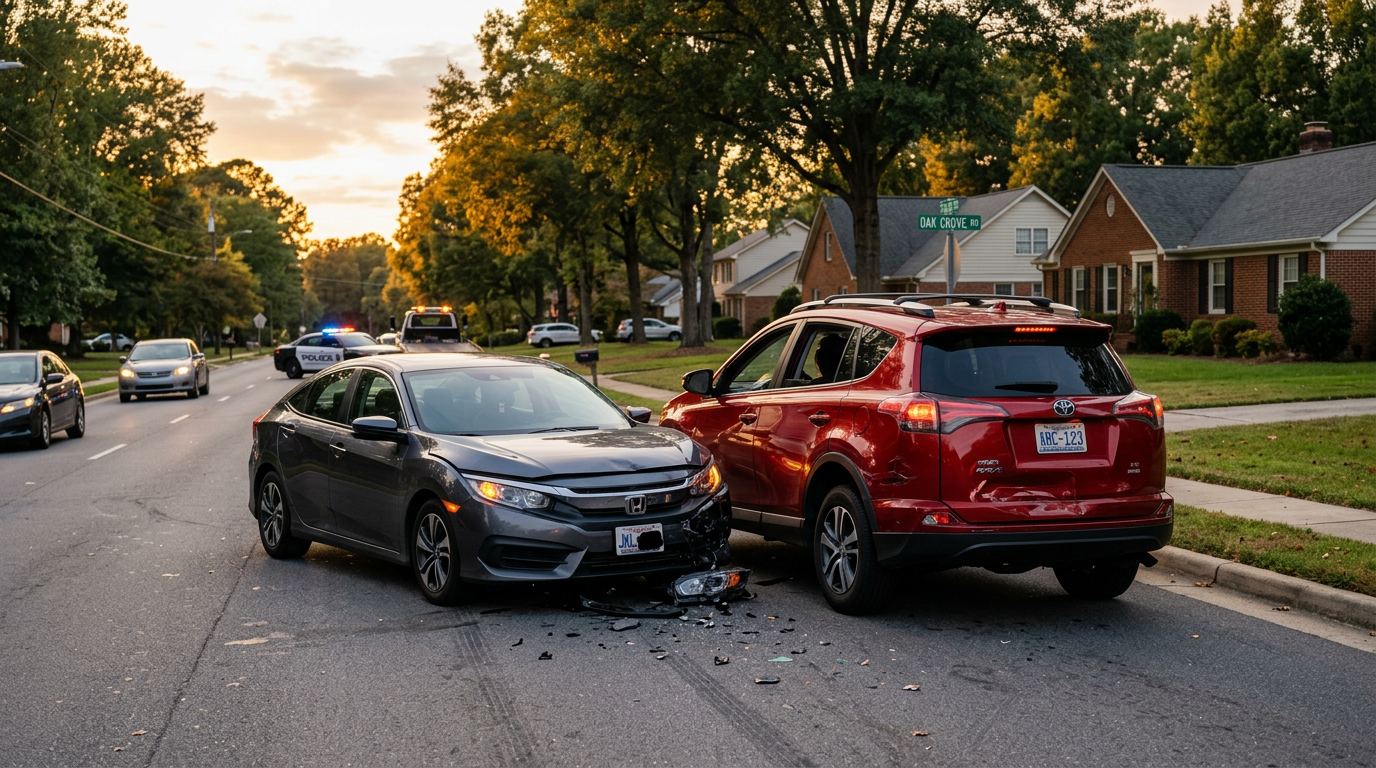
Rear-end collisions are the single most common type of motor vehicle accident in the United States. According to the National Highway Traffic Safety Administration, they account for roughly 29% of all crashes, and in North Carolina, the numbers are consistent with that national average. On congested stretches of I-85 between Charlotte and Gastonia, on I-77 through Mooresville, and at stoplights across the Greater Charlotte metro area, rear-end accidents happen every single day.
Most people assume these cases are simple. Someone hits you from behind, so they are at fault. End of story. That assumption is dangerously wrong, especially in North Carolina, where the contributory negligence rule can eliminate your entire claim if the insurance company convinces a jury you were even 1% responsible for the collision. What should be a straightforward insurance claim becomes a legal minefield.
Attorney Ryan P. Duffy spent years on the other side of these cases, defending insurance companies against rear-end accident claims. He saw firsthand how adjusters evaluate these files, what triggers a low-ball offer, and what internal metrics they use to decide whether to fight a claim or pay it fairly. Now he uses that insider knowledge exclusively for injured people in North Carolina and South Carolina. That perspective makes a real difference in how your case is built, negotiated, and, if necessary, tried.
This page is a comprehensive resource covering rear-end accident law in both North Carolina and South Carolina. It explains your rights, the legal theories that apply, the defenses insurance companies will raise against you, and the practical steps you should take to protect your claim from day one.
Injured in a Rear-End Collision? Get the Compensation You Deserve.
The Presumption of Negligence in Rear-End Collisions
In both North Carolina and South Carolina, the driver who rear-ends another vehicle is presumed to be negligent. This presumption exists because drivers have a legal duty to maintain a safe following distance, to pay attention to the road ahead, and to operate their vehicle at a speed that allows them to stop safely when traffic conditions change.
North Carolina codifies the duty to maintain a safe following distance under N.C. Gen. Stat. 20-152, which requires that drivers not follow more closely than is reasonable and prudent given speed, traffic, and road conditions. When a driver slams into the back of another vehicle, the natural inference is that they were following too closely, driving too fast for conditions, or simply not paying attention.
South Carolina applies the same principle under S.C. Code Ann. 56-5-1930, which similarly requires a reasonable and prudent following distance.
But here is where it gets important: this presumption is rebuttable. It is not an automatic finding of liability. The at-fault driver’s insurance company will immediately begin looking for evidence to shift blame to you. They will claim you stopped short, that your brake lights were out, that you were driving erratically, or that you changed lanes suddenly. If they can establish any of those defenses with credible evidence, the presumption weakens, and in a contributory negligence state like North Carolina, even a small amount of blame on your part can destroy your entire case.
North Carolina’s Contributory Negligence Rule and Why It Matters
North Carolina is one of only four states (along with Virginia, Maryland, and Alabama, plus the District of Columbia) that still follows the doctrine of pure contributory negligence. Under this rule, codified at N.C. Gen. Stat. 1-139, if you are found to have contributed to the accident in any way, even by 1%, you are completely barred from recovering any compensation.
Read that again. Not reduced compensation. Zero compensation.
This is the single most important legal concept for anyone involved in a rear-end accident in North Carolina to understand. Insurance companies in this state are relentless about finding contributory negligence, because it is the cheapest and most effective defense they have. Even in a clear rear-end collision where their insured was texting and driving, the adjuster will look for any argument that you contributed to the crash.
Common contributory negligence arguments in rear-end cases include:
- Sudden and unexpected stop. The insurer claims you stopped for no legitimate reason in a moving lane of traffic, making the collision unavoidable.
- Brake light malfunction. If your brake lights were out or dim, the following driver may argue they had no adequate warning you were stopping.
- Distracted driving on your part. The insurer may argue you were looking at your phone, adjusting your GPS, or otherwise distracted, causing you to brake suddenly.
- Failure to pull to the shoulder. If your vehicle was disabled or moving slowly, the insurance company may argue you should have moved off the roadway.
- Lane change into the path of the following vehicle. The insurer claims you merged or changed lanes immediately before the collision, leaving the other driver insufficient time to react.
- Rolling backward. In stop-and-go traffic or on a hill, the rear driver may claim you rolled backward into their vehicle.
Each of these defenses can be countered with the right evidence, but you need an attorney who understands how insurance companies build these arguments internally. Ryan Duffy has sat in those strategy meetings. He knows what the adjuster is looking for and how to shut down contributory negligence arguments before they gain traction.
The Last Clear Chance Doctrine
North Carolina recognizes the last clear chance doctrine, which is a critical exception to contributory negligence. Under this doctrine, even if you were partially negligent, you can still recover if the defendant had the last clear chance to avoid the accident and failed to do so.
In a rear-end collision, this doctrine works like this: suppose you were stopped in a lane of traffic with your hazard lights off (arguably negligent on your part). If the rear driver saw you stopped from a significant distance and still failed to brake, slow down, or change lanes, the rear driver had the last clear chance to avoid the collision. Your contributory negligence may be excused.
The last clear chance doctrine has two forms in North Carolina: the “discovered peril” version (the defendant actually saw the danger) and the “constructive discovery” version (the defendant should have seen the danger through reasonable observation). Both can preserve your right to compensation even when the insurance company is pushing a contributory negligence defense.
South Carolina’s Comparative Fault System
If your rear-end accident happened in South Carolina, perhaps on I-77 near Rock Hill, on Highway 521 near Lancaster, or anywhere else across the state, the fault analysis works differently and, in many cases, more favorably for the injured person.
South Carolina follows a modified comparative negligence system with a 50% bar rule, codified at S.C. Code Ann. 15-38-15. Under this system, you can recover damages even if you were partially at fault, as long as your fault does not equal or exceed 50%. If you were 20% at fault, your recovery is reduced by 20%, but you still receive 80% of your damages. If you were 50% or more at fault, you recover nothing.
This is a massive difference from North Carolina. In a case where the insurance company might argue you were 10% responsible for a rear-end collision, that argument would potentially destroy your entire claim in North Carolina. In South Carolina, it would reduce your recovery by 10%, which is a far more reasonable outcome.
For people living in the Charlotte metro area who are injured in South Carolina, or for South Carolina residents commuting into North Carolina, the state where the accident occurred determines which fault system applies. This is not a technicality. It is a fundamental difference that can mean the difference between a six-figure recovery and getting nothing.
The Sudden Stop Doctrine and Its Limits
Insurance companies love the sudden stop defense. The theory is straightforward: if the lead vehicle stopped suddenly and without warning, the following driver could not reasonably have avoided the collision, and the lead driver’s sudden stop was the proximate cause of the crash.
In North Carolina, the sudden stop defense is recognized but limited. Courts have held that a driver who suddenly stops in the roadway without good cause may be negligent. However, stopping for a legitimate reason, such as a traffic signal, a pedestrian, slowing traffic ahead, road debris, or an animal in the roadway, is not negligence. Drivers are entitled to stop when conditions require it, and following drivers are expected to maintain enough distance to stop safely.
The burden of proving a sudden, unjustified stop falls on the defendant. The insurance company must show not just that you stopped, but that the stop was unreasonable and that their insured could not have avoided the collision despite driving prudently. If the rear driver was following at a safe distance and paying attention, they should have been able to stop in time regardless of whether the lead vehicle stopped suddenly.
In practice, the sudden stop defense rarely holds up on its own. It works best for the insurance company when combined with other evidence, such as witness testimony that the lead driver stopped for no apparent reason or dashcam footage showing erratic driving. Without that corroborating evidence, the presumption of rear-driver negligence remains strong.
Multi-Vehicle Rear-End Pile-Ups
Chain-reaction rear-end collisions present unique liability challenges. When Vehicle C rear-ends Vehicle B, pushing Vehicle B into Vehicle A, the question of who is responsible for Vehicle A’s injuries becomes complicated.
In most multi-vehicle pile-ups, the initial striking vehicle (Vehicle C in the example above) bears the primary liability. However, insurance companies for the middle vehicle may argue that their driver also rear-ended the vehicle ahead and should share fault. The middle vehicle’s insurer may try to claim that their driver was following too closely and would have hit the lead vehicle regardless of the impact from behind.
Sorting out liability in chain-reaction crashes requires thorough accident investigation, including analysis of impact points, vehicle damage patterns, skid marks, and witness statements. An experienced attorney will work with accident reconstruction experts when needed to establish the sequence of impacts and identify who actually caused the collision.
These cases also involve multiple insurance policies and adjusters, each pointing fingers at the others. Having an attorney who understands how multi-insurer claims work and how to coordinate or litigate against multiple defendants is essential for recovering full compensation.
Dealing with Insurance Company Pushback After a Rear-End Crash?
Ryan Duffy spent years defending insurance companies. Now he fights for you. Get a free case review.
Whiplash, Soft Tissue Injuries, and the “Minor Impact” Myth
Whiplash is the signature injury of rear-end collisions, and it is also the injury that insurance companies work hardest to minimize. The biomechanics are well-established: when a vehicle is struck from behind, the occupant’s torso is pushed forward by the seat while the head momentarily stays in place, creating a rapid hyperextension of the cervical spine followed by hyperflexion. This whipping motion damages muscles, ligaments, tendons, facet joints, and intervertebral discs in the neck.
The severity of whiplash injuries is not reliably correlated with the speed of the impact or the amount of vehicle damage. Peer-reviewed research published in the Journal of Orthopaedic Medicine and the Spine Journal has demonstrated that collisions at speeds as low as 5-10 mph can produce significant cervical injuries. The human neck is vulnerable to these forces in ways that vehicle bumpers are not designed to prevent.
Common soft tissue injuries from rear-end collisions include:
- Cervical strain and sprain (whiplash): Damage to the muscles and ligaments of the neck, causing pain, stiffness, headaches, and reduced range of motion that can persist for months or years.
- Herniated and bulging discs: The impact forces can rupture or displace intervertebral discs, pressing on nerve roots and causing radiating pain, numbness, and weakness in the arms and hands.
- Facet joint injuries: The small joints connecting each vertebra can be damaged, causing chronic pain that worsens with neck movement.
- Thoracic and lumbar injuries: While the neck absorbs the most force, the mid and lower back can also sustain sprains, disc injuries, and muscle damage.
- Temporomandibular joint (TMJ) dysfunction: The impact can jar the jaw, leading to chronic pain, clicking, difficulty chewing, and headaches.
- Concussion and mild traumatic brain injury: The rapid acceleration and deceleration of the brain within the skull can cause concussion symptoms, including headaches, cognitive fog, memory problems, and mood changes.
The Problem of Delayed Symptoms
One of the most dangerous aspects of rear-end accident injuries is that symptoms often do not appear immediately. Adrenaline masks pain at the accident scene. Soft tissue inflammation builds gradually over 24 to 72 hours. Disc herniations may not produce noticeable symptoms for days or weeks after the initial injury.
This delay creates a significant problem for your claim. Insurance adjusters will point to the gap between the accident and the onset of symptoms as evidence that your injuries were caused by something other than the collision. They will argue that you felt fine at the scene, that you told the responding officer you were not injured, and that you did not seek medical treatment for days. Each of these facts will be used to undermine the connection between the accident and your injuries.
This is why medical documentation from the very beginning is critical. Even if you feel only mildly sore after a rear-end collision, see a doctor within 24 hours. Document every symptom, no matter how minor. Follow up with your physician and any specialists as symptoms develop. The medical record you create in the first few weeks after the accident will be the foundation of your injury claim.
Insurance Company Tactics in Rear-End Accident Claims
Ryan Duffy did not learn about insurance company tactics from a textbook or a CLE seminar. He learned them from the inside, spending years as an insurance defense attorney working with adjusters, reviewing claim files, and building defense strategies against injured people. He knows exactly what happens when your claim file lands on an adjuster’s desk, and that knowledge is now your advantage.
Here are the most common tactics you will face:
The Low-Ball Soft Tissue Offer
Insurance companies use computer programs like Colossus and Claims Outcome Advisor to generate initial settlement values. These programs are designed to undervalue soft tissue claims. They assign dollar values based on diagnosis codes and treatment types, and they consistently produce offers that do not account for the real impact of chronic pain on a person’s daily life. An adjuster may offer $3,000 to $5,000 for a whiplash injury that will affect you for years. Do not accept the first offer.
The “Pre-Existing Condition” Argument
If you have any history of neck or back problems, the insurance company will seize on it. They will request your entire medical history going back years or decades, looking for any prior complaints. What they will not tell you is that the legal standard in North Carolina does not require you to have been in perfect health before the accident. Under the eggshell plaintiff doctrine, also called the “thin skull rule,” a defendant takes their victim as they find them. If you had a pre-existing degenerative disc condition that was aggravated and made symptomatic by the rear-end collision, the at-fault driver is responsible for the full extent of the aggravation.
Recorded Statements Designed to Trap You
Within days of the accident, the at-fault driver’s insurance company will call and ask for a recorded statement. They will be friendly and sympathetic. They will tell you this is just routine. It is not routine. The adjuster’s goal is to get you on record minimizing your injuries, admitting you felt okay at the scene, or making statements that can later be used to argue contributory negligence. Do not give a recorded statement without speaking to an attorney first.
Surveillance and Social Media Monitoring
Insurance companies routinely conduct surveillance on claimants, especially in soft tissue cases where the injuries are not visible. They hire investigators to follow you, photograph you, and record video of your daily activities. They also monitor your social media accounts. A photograph of you smiling at a family barbecue, playing with your kids, or carrying groceries can be taken out of context and presented to a jury as evidence that your injuries are not as severe as you claim.
This does not mean you need to live in fear. It means you should be aware that anything you do in public and anything you post online can and will be used against you. Your attorney can advise you on how to manage this risk without putting your life on hold.
Disputing the Need for Medical Treatment
Insurers will hire their own doctors to conduct “independent” medical examinations (IMEs) and review your medical records. These physicians are paid by the insurance company and frequently conclude that your treatment was excessive, unnecessary, or unrelated to the accident. The insurance company then uses these reports to deny payment for physical therapy, chiropractic care, epidural injections, or surgery. An experienced attorney will challenge the credibility of these biased opinions with your treating physicians’ records and, when necessary, with independent medical experts.
What to Do After a Rear-End Accident in North Carolina or South Carolina
The steps you take in the hours and days after a rear-end collision can make or break your claim. Here is what you should do:
- Call 911 and get a police report. Even if the damage looks minor, call law enforcement. A police report creates an official record of the accident, including the officer’s observations about fault. In North Carolina, officers are required to investigate and report crashes resulting in injury or property damage above $1,000 (N.C. Gen. Stat. 20-166.1).
- Seek medical attention within 24 hours. Go to the emergency room, urgent care, or your primary care physician. Tell them you were in a car accident and describe every symptom, even mild ones. This creates the medical documentation that links your injuries to the crash.
- Document everything at the scene. Photograph all vehicles from multiple angles, including close-ups of damage. Photograph the intersection or roadway, traffic signals, skid marks, debris, and weather conditions. Take photos of any visible injuries.
- Get witness contact information. If anyone saw the accident, get their name and phone number. Witness testimony can be critical in defending against contributory negligence claims.
- Do not give a recorded statement to the other driver’s insurer. You are not required to do so. Politely decline and tell them your attorney will be in contact.
- Do not post about the accident on social media. Anything you post can and will be used against you. Do not discuss the accident, your injuries, your activities, or your emotional state online.
- Do not accept a quick settlement offer. The first offer from the insurance company will come fast, and it will be low. It is designed to close your claim before you understand the full extent of your injuries. Many rear-end accident injuries worsen over weeks and months. Accepting an early settlement waives your right to additional compensation.
- Contact a rear-end accident attorney before speaking with any insurance adjuster. The consultation is free, and having an attorney involved early protects your rights from the beginning.
Property Damage Claims and Rental Car Coverage
In addition to your injury claim, a rear-end accident often involves significant property damage. Your vehicle may be repairable, or it may be declared a total loss. Understanding how property damage claims work helps you avoid leaving money on the table.
Vehicle Repair vs. Total Loss
If the cost to repair your vehicle exceeds its fair market value (or a percentage of its value, depending on the insurer’s formula), the insurance company will total it. You are entitled to the fair market value of your vehicle at the time of the accident, not the depreciated trade-in value. If you disagree with the insurer’s valuation, you can obtain your own appraisal and negotiate.
Diminished Value
Even after a full repair, a vehicle with accident history on its CarFax report is worth less than an identical vehicle without that history. In North Carolina, you have the right to claim diminished value from the at-fault driver’s insurance company. This is money on top of the repair cost to compensate you for the reduced resale value of your vehicle. Many people do not know this claim exists, and insurance companies will not volunteer it.
Rental Car Coverage
While your vehicle is being repaired or while you are searching for a replacement after a total loss, you are entitled to a rental car at the at-fault driver’s expense. The at-fault insurer must provide a comparable vehicle for a reasonable period. If they try to limit you to an economy rental when you drive an SUV, or if they try to cut off the rental before your vehicle is ready, push back.
Statute of Limitations: Deadlines That Cannot Be Extended
Both North Carolina and South Carolina impose strict deadlines for filing personal injury lawsuits. Missing these deadlines eliminates your right to compensation entirely, no matter how strong your case is.
- North Carolina: The statute of limitations for personal injury claims is 3 years from the date of the accident (N.C. Gen. Stat. 1-52(16)). For property damage claims, the deadline is also 3 years (N.C. Gen. Stat. 1-52(2)).
- South Carolina: The statute of limitations for personal injury claims is 3 years from the date of the accident (S.C. Code Ann. 15-3-530(5)). For property damage, it is also 3 years.
While both states share the same 3-year deadline, do not take this as an invitation to wait. Evidence degrades over time. Surveillance camera footage from businesses near the accident scene is typically overwritten within 30 to 90 days. Witnesses move, forget details, or become difficult to locate. Medical records are easier to connect to the accident when treatment begins promptly. The sooner you involve an attorney, the better your case will be.
There are limited exceptions to the statute of limitations, including for minors (the clock does not start until age 18) and for cases involving a defendant who leaves the state. However, these exceptions are narrow and should not be relied upon without legal advice.
Compensation Available in Rear-End Accident Cases
A rear-end accident claim in North Carolina or South Carolina may include the following categories of damages:
Economic Damages
- Past and future medical expenses: Emergency room visits, hospitalization, surgery, physical therapy, chiropractic care, pain management, prescription medications, and future medical care for ongoing injuries.
- Lost wages: Income lost while recovering from your injuries, including salary, hourly wages, commissions, bonuses, and self-employment income.
- Lost earning capacity: If your injuries prevent you from returning to your previous occupation or reduce your ability to earn income in the future.
- Property damage: Vehicle repair or replacement, personal belongings damaged in the crash, and diminished value.
- Out-of-pocket expenses: Rental car costs, transportation to medical appointments, home modifications, and household services you can no longer perform yourself.
Non-Economic Damages
- Pain and suffering: Physical pain from your injuries and the treatment required to address them.
- Emotional distress: Anxiety, depression, PTSD, driving phobia, sleep disturbances, and the psychological impact of living with chronic pain.
- Loss of enjoyment of life: Inability to participate in hobbies, sports, recreational activities, and daily pleasures you enjoyed before the accident.
- Loss of consortium: The impact of your injuries on your relationship with your spouse, including companionship, affection, and intimacy.
Punitive Damages
In cases involving egregious conduct, such as a rear-end collision caused by a drunk driver or a driver engaged in road rage, North Carolina allows punitive damages under N.C. Gen. Stat. 1D-15. These damages are capped at three times the compensatory damages or $250,000, whichever is greater. Punitive damages require clear and convincing evidence of fraud, malice, or willful or wanton conduct.
Insurance Minimums and Coverage Gaps
One of the practical realities of rear-end accident claims is that the at-fault driver may not carry enough insurance to cover your losses. Understanding minimum insurance requirements helps you anticipate potential coverage issues.
- North Carolina minimums (N.C. Gen. Stat. 20-279.21): $30,000 per person / $60,000 per accident for bodily injury, and $25,000 for property damage.
- South Carolina minimums (S.C. Code Ann. 38-77-140): $25,000 per person / $50,000 per accident for bodily injury, and $25,000 for property damage.
If your injuries exceed the at-fault driver’s policy limits, your own underinsured motorist (UIM) coverage becomes critical. UIM coverage fills the gap between the at-fault driver’s policy and your actual damages. If you were struck by an uninsured driver, your uninsured motorist (UM) coverage steps in to provide compensation.
North Carolina requires that all auto insurance policies include UM/UIM coverage equal to the bodily injury limits, unless the policyholder affirmatively rejects it in writing. If you carry 100/300 liability coverage, your UM/UIM should match unless you signed a rejection form. If you are unsure about your coverage, check your declarations page or call your agent.
Rear-End Accidents Involving Commercial Vehicles
Being rear-ended by a commercial vehicle, such as a tractor-trailer, delivery truck, or company vehicle, adds layers of complexity and potential liability. Commercial drivers are held to higher standards under federal and state regulations. Their employers may be liable under the doctrine of respondeat superior (employer liability for acts committed within the scope of employment).
Commercial vehicle rear-end cases often involve:
- Federal Motor Carrier Safety Regulations (FMCSRs) governing following distance, hours of service, vehicle maintenance, and driver qualifications.
- Electronic logging device (ELD) data that can show whether the driver was fatigued or in violation of hours-of-service rules.
- Event data recorder (EDR) or “black box” information showing speed, braking, and other vehicle data at the time of impact.
- Higher insurance policy limits. Commercial vehicles typically carry $750,000 to $1,000,000 or more in liability coverage, which means full compensation is more likely available.
- Employer negligence. Claims against the trucking company for negligent hiring, training, supervision, or maintenance.
If you were rear-ended by a commercial vehicle, it is critical to preserve evidence quickly. Trucking companies are known to send rapid response teams to accident scenes to document evidence favorable to the company and to begin defending the case before you even leave the hospital.
Rear-Ended by a Truck or Commercial Vehicle?
These cases require immediate action to preserve critical evidence. Contact us now for a free case evaluation.
How Ryan Duffy’s Insurance Defense Background Helps Your Case
Most personal injury attorneys learn about insurance company tactics from the plaintiff’s side. They see the denial letters, the low-ball offers, and the defense medical examinations after the fact. Ryan Duffy learned about them from the other side of the table.
As a former insurance defense attorney, Ryan knows:
- How claims are evaluated internally. Insurance companies use specific valuation formulas and software programs to assess claims. Ryan knows what factors drive those numbers up and what triggers a low evaluation.
- What makes adjusters nervous. There are specific types of evidence, legal arguments, and case presentations that cause insurance companies to increase their settlement authority. Ryan builds cases with those pressure points in mind.
- How defense attorneys prepare for trial. If your case goes to litigation, Ryan knows the defense playbook because he wrote it for years. He anticipates defense strategies and prepares counter-arguments before the other side even files their answer.
- When the insurance company is bluffing. Adjusters sometimes take aggressive positions early in a case hoping the claimant will settle cheap. Ryan can distinguish a genuine coverage dispute from a negotiation tactic.
This is not just a marketing point. It is a genuine strategic advantage that translates directly into better outcomes for clients. Understanding how the other side thinks allows Ryan to build stronger cases, negotiate more effectively, and present more compelling arguments at trial.
The Importance of Medical Documentation in Rear-End Cases
Your medical records are the single most important piece of evidence in your rear-end accident claim. They establish what injuries you sustained, connect those injuries to the collision, and document the treatment you needed. Gaps, inconsistencies, or omissions in your medical records will be exploited by the insurance company.
Best practices for medical documentation include:
- See a doctor within 24 hours of the accident. The longer you wait, the easier it is for the insurer to argue your injuries came from something else.
- Be thorough in describing your symptoms. Tell your doctor about every area of pain, every headache, every instance of numbness or tingling, every sleep disturbance. If you do not report it, it does not exist in the medical record.
- Follow your treatment plan. Gaps in treatment look like gaps in pain to an insurance company. If you miss appointments, stop physical therapy early, or skip prescribed medications, the insurer will argue you were not actually hurt.
- Tell your doctor about symptom changes. As new symptoms develop or existing symptoms worsen, report them promptly. The progression of your condition needs to be documented in real time.
- Keep all receipts and records. Save every medical bill, pharmacy receipt, therapy co-pay, and mileage log for trips to medical appointments.
Common Defenses in Rear-End Accident Cases
Beyond contributory negligence and the sudden stop doctrine, insurance companies deploy several additional defenses in rear-end cases:
- The injuries are pre-existing. The insurer claims your neck or back pain existed before the accident and the collision did not cause new damage. Counter: The eggshell plaintiff rule protects you, and your medical records can show the difference between a dormant degenerative condition and an acute injury caused by the crash.
- The injuries are not related to the accident. The insurer argues that too much time passed between the accident and the onset of symptoms, suggesting another cause. Counter: Medical literature supports delayed symptom onset for soft tissue injuries, disc injuries, and concussions.
- The treatment was excessive. The insurer uses a hired medical expert to argue you did not need that much physical therapy, that chiropractic care was unnecessary, or that surgery was premature. Counter: Your treating physicians’ opinions carry significant weight, and their documented clinical findings support the treatment provided.
- The vehicle damage was minimal, so the injuries must be minimal. This is the “low impact” defense, and it is one of the most common and most misleading arguments insurers make. Counter: Biomechanical research demonstrates that occupant injury severity is not reliably predicted by vehicle damage.
- Failure to mitigate damages. The insurer argues you made your injuries worse by not following medical advice or by engaging in activities that aggravated your condition. Counter: Documentation of compliance with your treatment plan eliminates this argument.
Frequently Asked Questions About Rear-End Accidents in NC and SC
The other driver rear-ended me, but their insurance says I was partially at fault. Can they really deny my entire claim?
In North Carolina, yes. The contributory negligence rule means that if the insurance company can establish you were even 1% at fault, they can deny your claim entirely. This is why legal representation is critical in rear-end cases in NC. In South Carolina, partial fault reduces but does not eliminate your recovery, as long as you are less than 50% at fault.
My rear-end accident was at low speed and there is minimal damage to my car. Can I still have a serious injury claim?
Yes. Medical research consistently shows that low-speed rear-end collisions can cause significant soft tissue injuries, disc herniations, and concussions. The forces on the human body during a rear-end impact are not directly proportional to vehicle damage. Insurance companies push the “low impact, low injury” narrative because it saves them money, not because it reflects medical reality.
How long do I have to file a rear-end accident claim?
In both North Carolina and South Carolina, the statute of limitations is 3 years from the date of the accident. However, evidence degrades over time, and the sooner you involve an attorney, the stronger your case will be. Do not wait until the deadline approaches.
Should I give a recorded statement to the other driver’s insurance company?
No. You are not legally required to give a recorded statement to the at-fault driver’s insurer. These statements are used to find inconsistencies and build contributory negligence arguments against you. Politely decline and have your attorney communicate with the insurance company on your behalf.
What if the driver who hit me does not have enough insurance to cover my injuries?
Your own underinsured motorist (UIM) coverage can fill the gap between the at-fault driver’s policy limits and your actual damages. If the at-fault driver has no insurance at all, your uninsured motorist (UM) coverage applies. North Carolina requires UM/UIM coverage unless you signed a written rejection.
My symptoms did not appear until several days after the accident. Does that hurt my claim?
Delayed symptoms are extremely common in rear-end collisions. Adrenaline masks pain at the scene, and soft tissue inflammation builds over 24 to 72 hours. The insurance company will try to use the delay against you, but medical literature supports delayed onset, and early medical documentation can counter their argument.
Can I still recover compensation if my brake lights were out when I was rear-ended?
This is exactly the type of contributory negligence argument insurance companies love to make. In North Carolina, a brake light issue could potentially bar your recovery entirely. In South Carolina, it would reduce your recovery but not eliminate it (if your fault is under 50%). The last clear chance doctrine may also apply if the rear driver had enough time and distance to avoid the collision despite the brake light issue.
What is diminished value, and can I claim it after a rear-end accident?
Diminished value is the reduction in your vehicle’s market value after it has been repaired, simply because it now has an accident on its history. You are entitled to claim diminished value from the at-fault driver’s insurance in North Carolina. Many people do not know about this claim, and insurance companies will not tell you about it.
How much is my rear-end accident case worth?
Every case is different. The value depends on the severity of your injuries, the amount of medical treatment needed, your lost wages, the impact on your daily life, the available insurance coverage, and the strength of the liability evidence. Ryan Duffy provides a free, honest case evaluation and will tell you what he believes your case is worth based on his experience handling these claims.
Do I need a lawyer for a rear-end accident?
If you have any injuries beyond a minor bruise, yes. North Carolina’s contributory negligence rule makes legal representation essential. Even in what appears to be a clear liability case, the insurance company will look for ways to deny or minimize your claim. An attorney who understands insurance company tactics can protect your rights and typically secure a significantly higher recovery than what you would receive negotiating on your own.
Rear-Ended and Not Sure What to Do Next?
Ryan Duffy has handled rear-end accident claims from both sides. Free consultation. No fee unless he recovers compensation for you.
Get Your Free Consultation
Call 704-741-9399
Call 704-741-9399
Rear-End Accident Lawyers by City
The information on this page is for general informational purposes only and does not constitute legal advice. Every rear-end accident case is different, and outcomes depend on the specific facts and circumstances involved. North Carolina’s contributory negligence rule and South Carolina’s comparative fault system create distinct legal frameworks that require case-specific analysis. Past results do not guarantee future outcomes. Contact the Law Office of Ryan P. Duffy for a free consultation to discuss your specific situation.